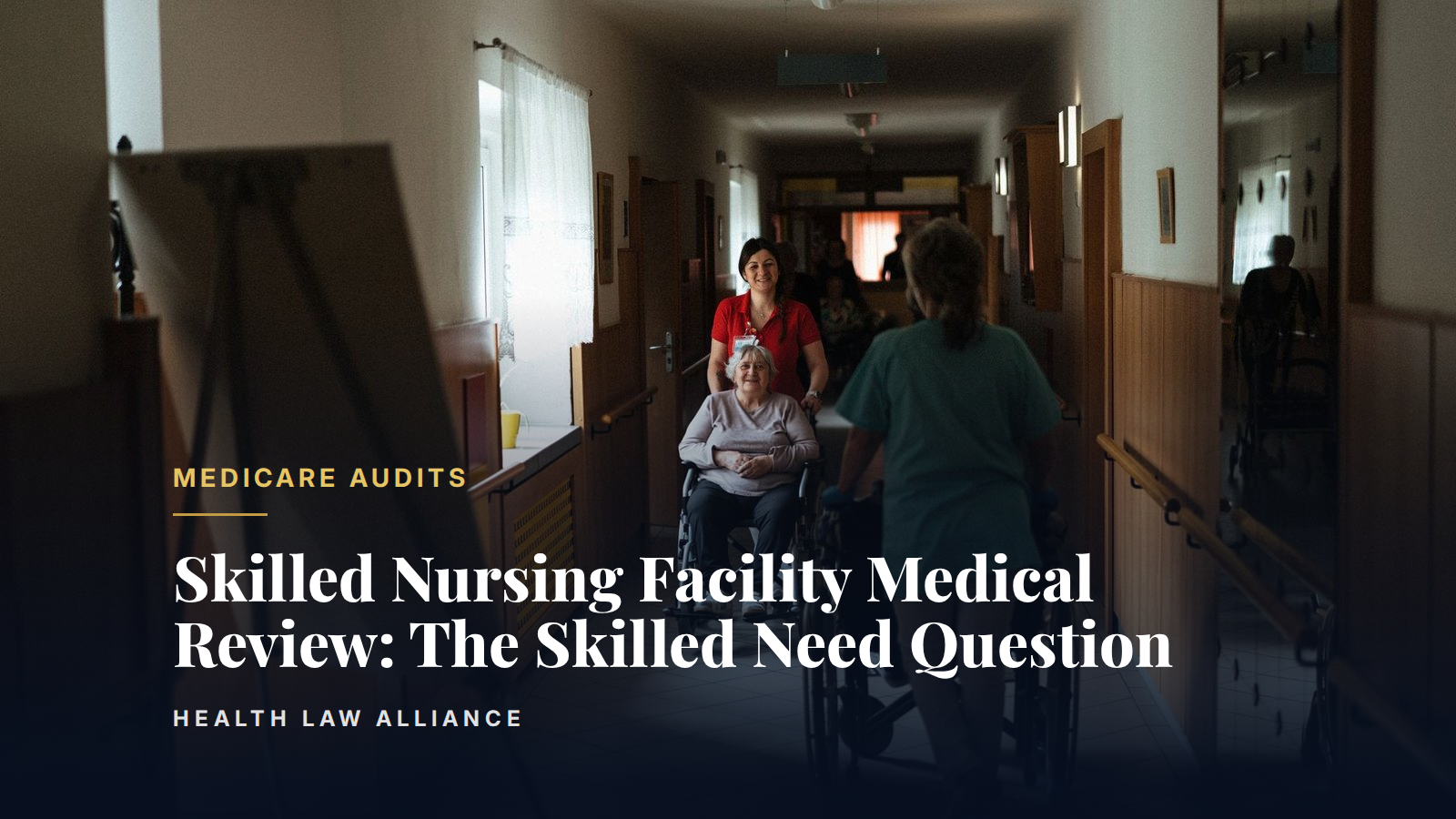
When a Medicare Administrative Contractor opens a medical review of a skilled nursing facility stay, the result turns on one finding: whether the patient required skilled nursing or skilled rehabilitation services, not whether the patient's condition ultimately improved. The Medicare Benefit Policy Manual sets that skilled-need test out at Chapter 8, Section 30, and a documentation gap on that single finding can convert weeks of covered Part A care into a full recoupment demand.
The Four-Part SNF Level of Care Test
Coverage of a skilled nursing facility stay under 42 CFR 409.31 and Chapter 8, Section 30 of the Benefit Policy Manual depends on four factors, and failing any one of them defeats coverage even where the facility did deliver some skilled services. The patient must require skilled nursing or skilled rehabilitation services ordered by a physician for a condition tied to the qualifying hospital stay. Those skilled services must be needed on a daily basis. As a practical matter, considering economy and efficiency, the daily skilled services can be provided only on an inpatient basis in a skilled nursing facility. And the services delivered must be reasonable and necessary for the patient's illness or injury, consistent in duration and quantity with accepted medical practice. This four-part test is the foundation of Medicare audit defense for skilled nursing facilities. A contractor's medical review denial starts with a disagreement on one of these four factors.
The Jimmo Maintenance Standard
The Jimmo v. Sebelius settlement, approved by the United States District Court for the District of Vermont on January 24, 2013, corrected a practice under which some contractors denied skilled nursing facility coverage once a patient stopped improving. CMS revised Chapter 8 of the Benefit Policy Manual to state the standard directly.
Coverage of nursing care and/or therapy to perform a maintenance program does not turn on the presence or absence of an individual's potential for improvement from the nursing care and/or therapy, but rather on the beneficiary's need for skilled care.
What a Daily Basis Requires
Section 30.6 of Chapter 8 defines the daily basis requirement separately for nursing and therapy. Skilled nursing services must be needed and provided on essentially a 7-days-a-week basis. A stay based solely on the need for skilled rehabilitation services meets the daily basis requirement when the patient needs and receives those services at least 5 days a week; therapy furnished on fewer than 5 days a week does not meet it. A short break of a day or two for a documented medical reason, such as extreme fatigue, does not itself defeat coverage, but staggering different therapy types across the week merely to have some session occur daily does not satisfy the requirement unless a genuine medical reason prevents furnishing them on the same day.
Documentation That Defends the Skilled-Need Finding
Section 30.2.2.1 of the Benefit Policy Manual requires documentation showing that skilled involvement was necessary for the services to be furnished safely and effectively, and that the services were reasonable and necessary in duration and quantity. A patient's diagnosis or prognosis is never, by itself, the basis for finding that a service is not skilled. When a patient's treatment goal shifts from restoration to maintenance, the manual requires that the change be made prospectively; a provider cannot retroactively recharacterize an earlier restoration goal as a maintenance goal to defend a stay after the fact. A medical review finding that the skilled-need test was not met can be referred to a Recovery Audit Contractor, its sample extrapolated across the full lookback period, and converted into a recoupment demand well beyond the dollar value of the claims actually reviewed. A facility already managing a Medicare revalidation cycle or weighing a self-audit disclosure faces the identical documentation burden on every open stay.
Health Law Alliance's attorneys have overseen 2,000+ audits and handled 5,000+ matters, with 25+ years of experience.
Why Early Legal Counsel Is Critical
It is critical that skilled nursing facility providers promptly retain experienced healthcare defense counsel upon receiving an audit notice, a prepayment review request, or any other government or MAC inquiry tied to a Part A stay. Early legal intervention can protect the provider's rights, ensure appropriate responses to government and contractor requests, avoid inadvertent admissions, preserve relevant defenses, and allow counsel to communicate with investigators or contractors on the provider's behalf. Delaying legal representation can significantly affect the outcome of a matter and expose the provider to unnecessary risk.
How Health Law Alliance Can Help
Health Law Alliance represents skilled nursing facilities in medical review, RAC audits, and Medicare Administrative Contractor post-payment review tied to the skilled-need question. Our attorneys build the restoration-to-maintenance documentation record the Benefit Policy Manual requires before an auditor ever asks for it. If your facility is facing a SNF medical review or a Part A stay denial, contact our skilled nursing facility audit defense attorneys for a free, confidential consultation.