The False Claims Act runs on two clocks, not one, and compliance officers evaluating a self-disclosure or a threatened qui tam suit are usually litigating the wrong one. Under 31 U.S.C. § 3731(b), an action must be brought within six years of the violation, or within three years of when the official of the United States charged with responsibility to act knew or should have known the material facts, whichever period expires later, but never more than ten years after the violation itself. The Supreme Court settled who controls that longer clock in Cochise Consultancy, Inc. v. United States ex rel. Hunt, a unanimous 2019 decision that lets relators reach the full ten-year window even in cases the government declines to join.
The Two Periods in Section 3731(b)
Section 3731(b)(1) sets a six-year period running from the date the violation is committed. Section 3731(b)(2) adds a second track: three years from the date the material facts are known or reasonably should have been known by the responsible government official, capped at ten years from the violation. The statute's closing clause resolves any conflict between the two by applying whichever period expires last, so a violation the government does not discover for years can stay actionable deep into the ten-year window. A relator files under seal while the government investigates, and how a qui tam lawsuit unfolds during that seal period often determines which clock ends up controlling.
The Government-Knowledge Trigger
The three-year period in Section 3731(b)(2) runs from the government's knowledge, not the relator's. The statute measures the clock from when facts material to the case are known or reasonably should have been known by “the official of the United States charged with responsibility to act in the circumstances,” language that points at a government employee, not the private citizen who files the qui tam suit. Relators often investigate and document a scheme for years before any government official reviews the file, so anchoring the clock to the government's knowledge is what keeps the longer period open past the point many compliance officers assume the exposure has closed.
Cochise Consultancy and the Tolling Fight
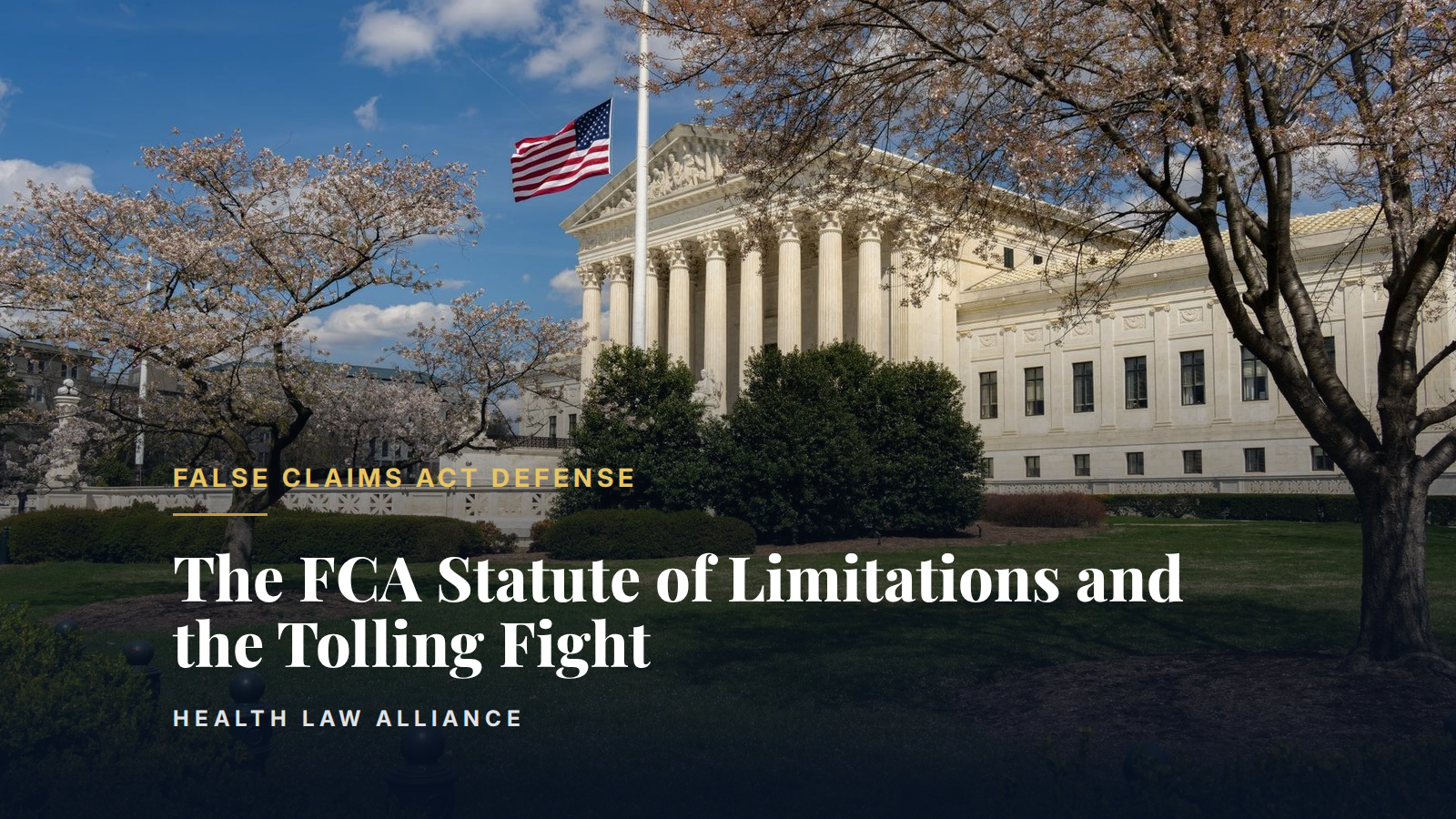
Before 2019, courts split over whether the three-year period even applied when the government declined to intervene, since the case was no longer the government's to prosecute. The Supreme Court resolved the split in Cochise Consultancy, Inc. v. United States ex rel. Hunt, No. 18-315, decided May 13, 2019. The Court held unanimously, in an opinion by Justice Thomas, that Section 3731(b)(2) applies to every civil action under Section 3730, intervened or not, and that a private relator does not become the official of the United States merely by filing suit in the government's name. A relator in a declined case can reach the full ten-year outer limit, calculated from the government's knowledge rather than the relator's own.
Only the government's knowledge starts the three-year clock, whether or not the government ever joins the case.
Why the Ten-Year Window Changes the Calculus
For healthcare fraud matters, a six-year versus ten-year exposure window is rarely academic. Billing schemes and kickback arrangements often run for years before a whistleblower comes forward, and the extended period can reach conduct a compliance officer had written off as time-barred. The limitations period is also only one line of defense. The False Claims Act's damages and per-claim penalty exposure and the materiality defense the Supreme Court described in Escobar remain available regardless of which limitations period applies. A self-disclosure made without confirming which government official's knowledge controls the clock can walk a company into a longer exposure window than the six-year period alone would suggest, sometimes ending in a corporate integrity agreement or an OIG exclusion the company could otherwise have avoided.
Why Early Legal Counsel Is Critical
It is critical that compliance officers and the healthcare providers they support promptly retain experienced healthcare defense counsel upon receiving a subpoena, audit notice, investigative demand, or any indication that a qui tam suit may be pending. Early legal intervention can protect the company's rights, ensure appropriate responses to government requests, avoid inadvertent admissions, preserve relevant defenses, and allow counsel to communicate with investigators or relator's counsel on the company's behalf. Delaying legal representation can significantly affect the outcome of a matter and expose the provider to unnecessary risk, particularly when the limitations analysis itself is contested.
How Health Law Alliance Can Help
Health Law Alliance has handled 5,000+ matters for healthcare providers and companies facing federal and state scrutiny, including False Claims Act investigations where the limitations period itself was disputed. If your organization is evaluating a self-disclosure, defending a qui tam suit, or facing a demand that reaches back further than expected, contact us for a free, confidential consultation and let an attorney confirm which clock is actually running before you respond.