A compounding pharmacy's defense against an FDA inspection finding often comes down to one file: the record proving where the active pharmaceutical ingredient came from. Section 503A of the Federal Food, Drug, and Cosmetic Act conditions its exemption from federal drug approval, labeling, and cGMP requirements on the bulk drug substance meeting specific sourcing and documentation standards, including a valid Certificate of Analysis. When that Certificate is missing, expired, or tied to a lot number that does not match the container received, the pharmacy loses the exemption for that batch, and the preparation is treated as an unapproved new drug.
The Section 503A Sourcing Requirement
Under 503A (21 U.S.C. § 353a), a compounded drug qualifies for exemption from FDA new drug approval, misbranding, and cGMP requirements only if the bulk drug substance complies with an applicable USP or NF monograph, if one exists, or, absent a monograph, is a component of an FDA-approved drug, or appears on the 503A bulks list FDA maintains under the statute. FDA's January 2025 guidance, Interim Policy on Compounding Using Bulk Drug Substances Under Section 503A, layers two further conditions on top of that threshold test: the bulk drug substance must be manufactured by an establishment registered under Section 510 of the FDCA, and it must be accompanied by a valid Certificate of Analysis. Both conditions apply to every API a 503A pharmacy compounds with, whether the substance is already eligible or still awaiting placement on the bulks list.
What a Valid Certificate of Analysis Must Show
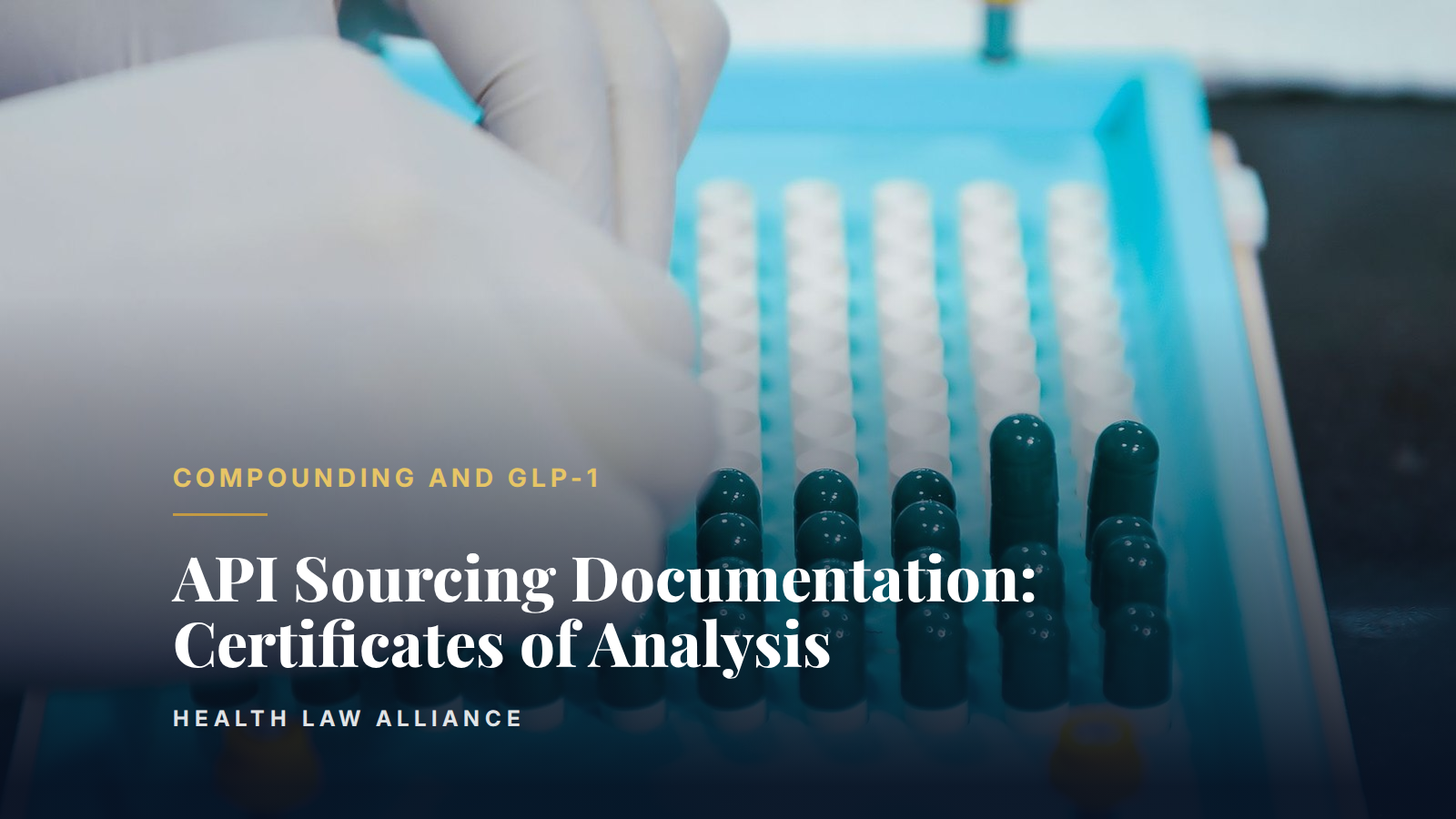
A Certificate of Analysis is only as reliable as the entity that signed it. FDA's interim policy defines the original manufacturer as the entity that actually produced the bulk drug substance, not a subsequent packer, repacker, labeler, or distributor, and requires that the original manufacturer and every manufacturer downstream of it be registered under Section 510, including foreign establishments registered under Section 510(i). A Certificate from a repackager standing in for the original manufacturer's registration and testing fails the condition. USP General Chapter <797> layers a parallel duty on the receiving pharmacy: compounding personnel verify the identity and quality of each component against its Certificate of Analysis, and against the applicable USP-NF monograph where one exists, before the substance goes into a preparation. That verification step, and the record of it, is what an inspector asks to see first.
Where the Documentation Trail Breaks Down
The gap FDA and state boards find most often is a mismatch between the lot number on the Certificate of Analysis and the lot number on the container actually received, a paperwork break that undoes the chain the interim policy requires. The second common gap is a supplier qualification file that stops at "a Certificate was received" and never confirms that the original manufacturer, not just the distributor holding the paperwork, is registered under Section 510. A pharmacy that cannot produce both documents for a compounded batch has no fallback position once an inspector asks for them: the bulk drug substance falls outside the exemptions in Section 503A for that batch, the beyond-use date assigned to the preparation rests on an unverified ingredient, and the finished product is treated as an unapproved new drug subject to FDA enforcement.
For the sourcing distinction between community pharmacy and outsourcing-facility compounding, see 503A vs 503B: Which Framework Governs Your Compounding. For the broader inspection file, see USP 797 and 800 Inspections: The Compliance File Inspectors Ask For. The same exposure sits behind current enforcement attention on peptide and tirzepatide compounding chains, addressed in Tirzepatide Compounding: Enforcement Risk After the Shortage List.
A Certificate of Analysis without proof of the original manufacturer's Section 510 registration is not documentation. It is an unverified claim waiting for an inspector to test it.
Why Early Legal Counsel Is Critical
It is critical that compounding pharmacies promptly retain experienced healthcare defense counsel upon receiving an FDA Form 483, a warning letter, or a state board inquiry touching API sourcing documentation. Early legal intervention can protect the pharmacy's rights, shape the response before the facts are locked in, avoid inadvertent admissions, and preserve the pharmacy's options if a self-disclosure becomes appropriate. Delaying representation can significantly affect the outcome, particularly once an incomplete supplier file becomes part of the inspection record.
How Health Law Alliance Can Help
Health Law Alliance represents compounding pharmacies and outsourcing facilities in FDA inspection responses, 483 findings, and state board of pharmacy investigations that turn on API sourcing and Certificate of Analysis documentation, as part of the firm's compounding pharmacy defense practice. The firm reviews supplier qualification files, Section 510 registration status, and Certificate of Analysis chains before an inspector does, and builds the response record while the facts are still fresh. If your pharmacy has received an FDA inspection notice, a 483 finding, or a state board inquiry involving ingredient sourcing, contact us for a free, confidential consultation.