
Healthcare Fraud Defense
Federal and state investigations, False Claims Act defense, and criminal healthcare fraud cases.
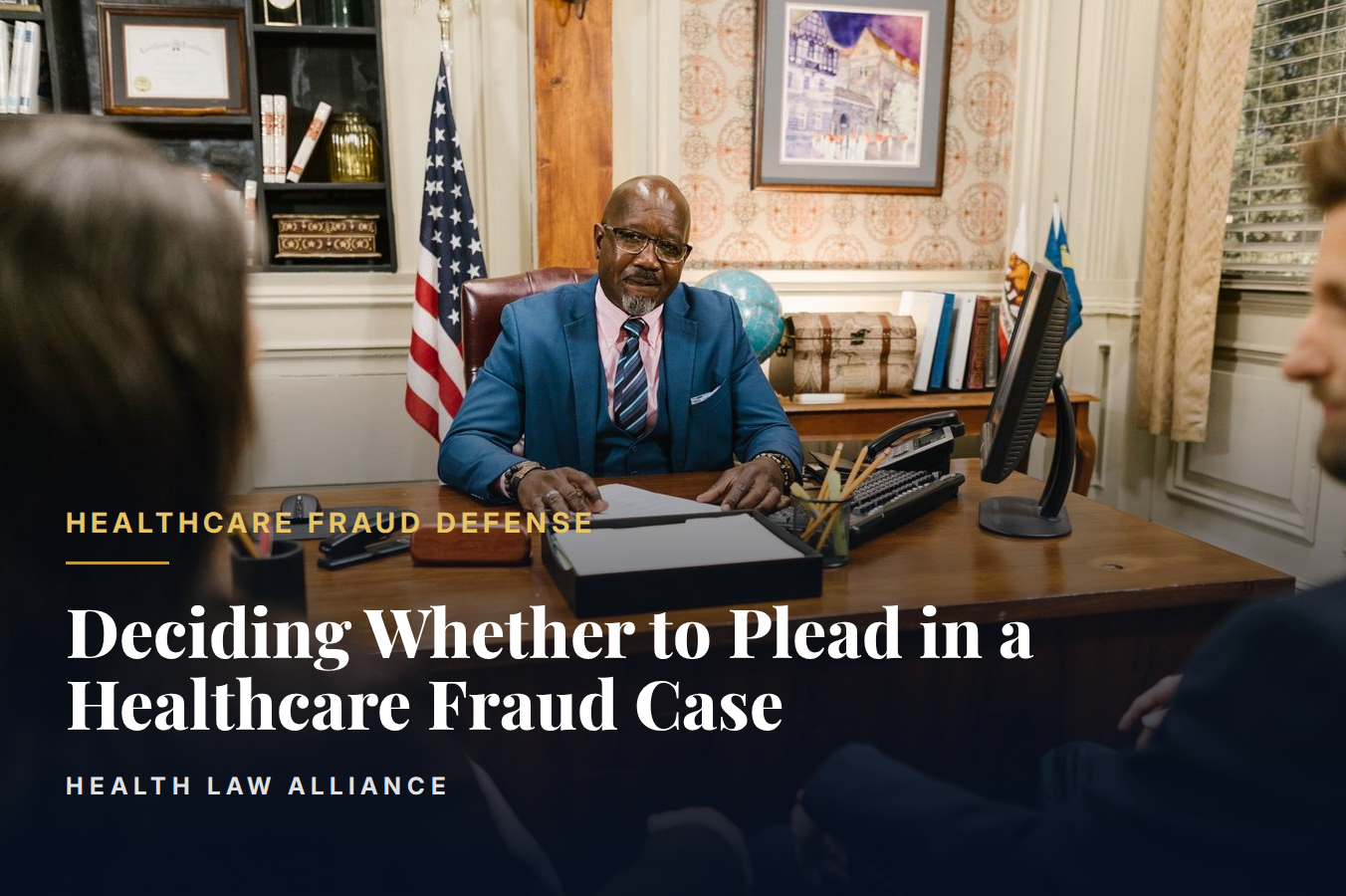
Deciding Whether to Plead in a Healthcare Fraud Case
What a healthcare fraud plea agreement contains: counts of conviction, loss and restitution stipulations, appeal waivers, and prog…
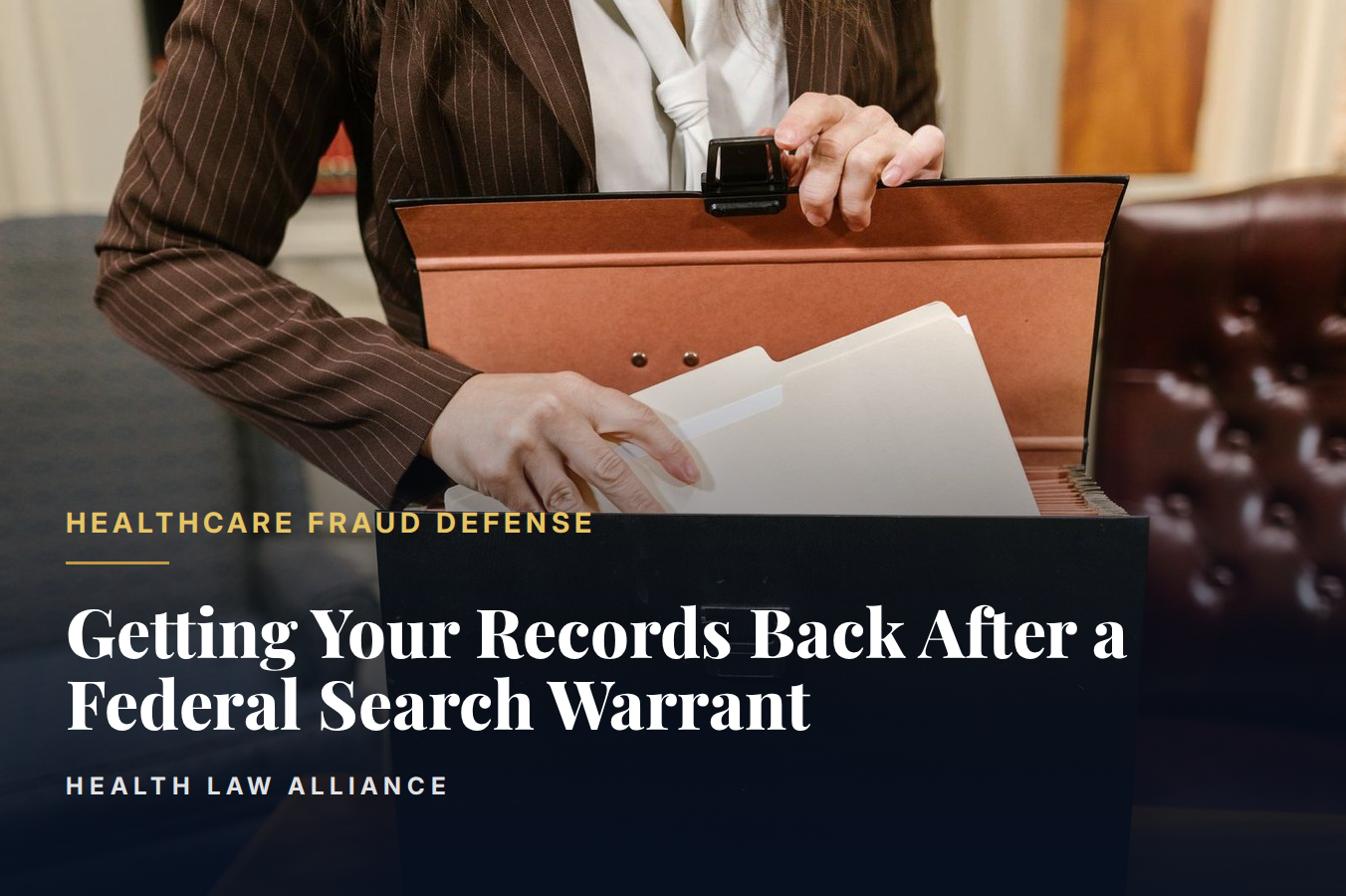
Getting Your Records Back After a Federal Search Warrant
What happens to seized patient records, imaged servers, and privileged files after a federal search warrant, and how a Rule 41(g)…
Telehealth Practice and Out-of-State Board Complaints
A telehealth visit can put a physician under a medical board in the state where the patient was located, with reciprocal risk to t…
Whistleblower Retaliation Claims by Former Employees
Protected activity, the three elements of a Section 3730(h) retaliation claim, and how a defensible termination record built in ad…
When an Employee Threatens to Report You
Preservation steps, False Claims Act retaliation exposure, and the personnel decisions that need counsel review before a report be…
Responding to a Board of Pharmacy Complaint
What a board of pharmacy complaint notice starts, what a written response should confirm or leave out, and how early statements ca…
Waivers of OIG Exclusion for Sole Community Providers
The narrow path to waiving an OIG program exclusion: the sole community physician standard, who can request it, and what it does n…
Summary Suspension: Emergency Action Against Your License
How medical boards suspend a license before any hearing, the imminent danger standard, and what happens at the expedited hearing t…
Upjohn Warnings: What Employees Must Be Told
An Upjohn warning tells an employee who the company's lawyer represents, who owns the privilege, and what happens if the company l…