
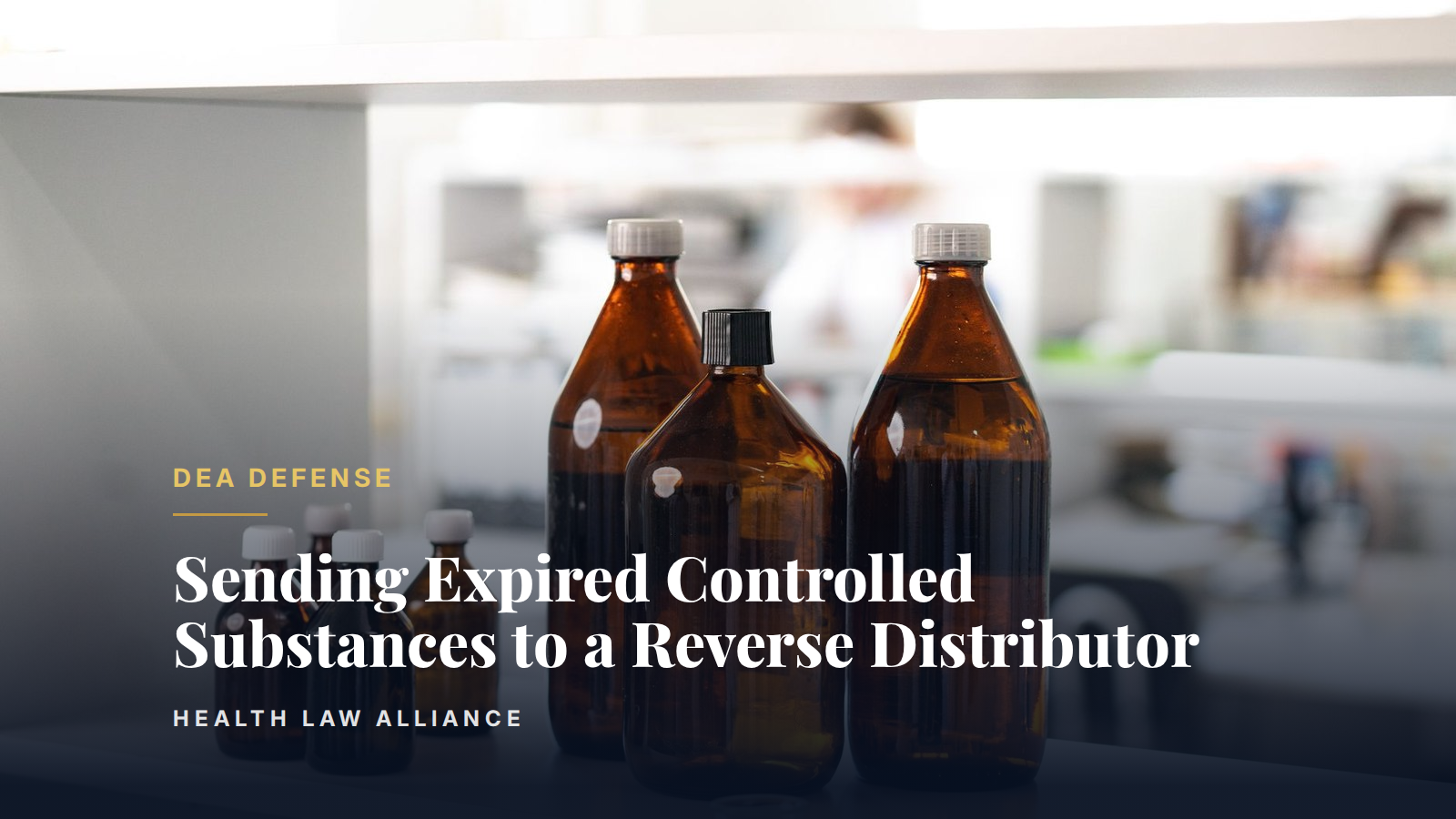
A pharmacy clearing expired or unwanted controlled substances off the shelf has two lawful paths: destroy them on site under Drug Enforcement Administration rules, or transfer them to a reverse distributor, a separate category of DEA registrant authorized to receive the drugs for return or destruction. The transfer step carries most of the paperwork risk. Each schedule carries a different form and record, and the pharmacy is left holding an incomplete file if a step is skipped. A gap that surfaces later in a DEA accountability review can become the basis for a DEA order to show cause or, in serious cases, an immediate suspension order.
Confirm the Reverse Distributor Is DEA-Registered
Only a company registered with the DEA specifically as a reverse distributor may lawfully receive controlled substances for return or destruction. Under 21 CFR 1317.15, anyone who reverse distributes a controlled substance must hold that registration, separate from a standard distributor or manufacturer registration. Before any shipment or pickup, request the company's current DEA registration certificate and confirm the registered location matches the address the drugs will reach. Shipping to a company that is not registered for that location moves a controlled substance outside the closed system the Controlled Substances Act is built on, regardless of the receiving company's own paperwork.
Schedule II Returns Run on a DEA Form 222
Schedule II controlled substances cannot move from a pharmacy to a reverse distributor on an invoice. The reverse distributor issues the pharmacy an official order form, DEA Form 222, or its electronic equivalent through the Controlled Substance Ordering System, and that form is the official record of the transfer. The pharmacy keeps the original for its files; the reverse distributor keeps a copy. A pharmacy that already reviews its purchasing-side CSOS orders for errors, covered in HLA's guide to DEA Form 222 and CSOS ordering errors, should apply the same review to the return side.
Schedules III Through V Need a Distribution Record, Not a Form 222
Schedule III, IV, and V controlled substances move to a reverse distributor without a DEA Form 222. Instead, the pharmacy must keep its own record of the distribution: drug name, dosage form, strength, quantity, and date transferred. That record sits with the pharmacy's other required files, alongside invoices, inventories, and dispensing logs. No DEA form substitutes for it. A pharmacy that assumes the reverse distributor's paperwork covers this obligation, the way a Form 222 covers a Schedule II return, is the one most likely to show a gap under audit.
Where Accountability Audits Find the Gaps
Two patterns recur when a pharmacy's controlled substance accountability does not reconcile. The first is product that left the shelf for a reverse distributor with no corresponding distribution record, so the pharmacy's inventory reconciliation cannot show where the units went. The second is the same returned units counted twice: once in the pharmacy's inventory, again when the pickup is logged as a separate transaction rather than the closing entry on the first one. Both patterns break the chain of records that the DEA's suspicious order monitoring system and the pharmacy's biennial inventory depend on. A shortfall the transfer records cannot explain may trigger a separate duty to file a DEA Form 106 for theft or significant loss, a different form from anything tied to the reverse distribution itself.
A reverse distributor's own record of destruction is not a substitute for the pharmacy's record of what left its shelf.
The Reverse Distributor Keeps the Destruction Record
Once the reverse distributor destroys the controlled substances, the reverse distributor, not the pharmacy, keeps the record of that destruction on DEA Form 41 (Registrant's Inventory of Drugs Surrendered). DEA guidance is explicit that Form 41 does not record the transfer itself, only the destruction. Under 21 CFR 1317.15, a reverse distributor must destroy, or arrange for the destruction of, anything it receives for that purpose no later than 30 calendar days after receipt. A pharmacy's own file should hold the distribution record or Form 222 for the transfer, plus separate confirmation that destruction occurred. HLA's guide to DEA Form 41 and controlled substance destruction covers the destruction filing in more depth.
Why early legal counsel is critical. Pharmacies should promptly retain experienced healthcare defense counsel upon receiving a DEA accountability audit request, a show cause inquiry, or any other request for records tied to a reverse distribution transaction. Early involvement can protect the pharmacy's rights, help prepare a complete response, and preserve relevant defenses before a recordkeeping gap is characterized as something more serious. Delaying representation can affect the outcome of a matter.
How Health Law Alliance can help. Health Law Alliance's attorneys have overseen 2,000+ audits and handled 5,000+ matters, with 25+ years of experience. The firm represents pharmacies nationwide in DEA audits and investigations, including matters that begin with a controlled substance accountability gap. Contact us for a free, confidential consultation.