
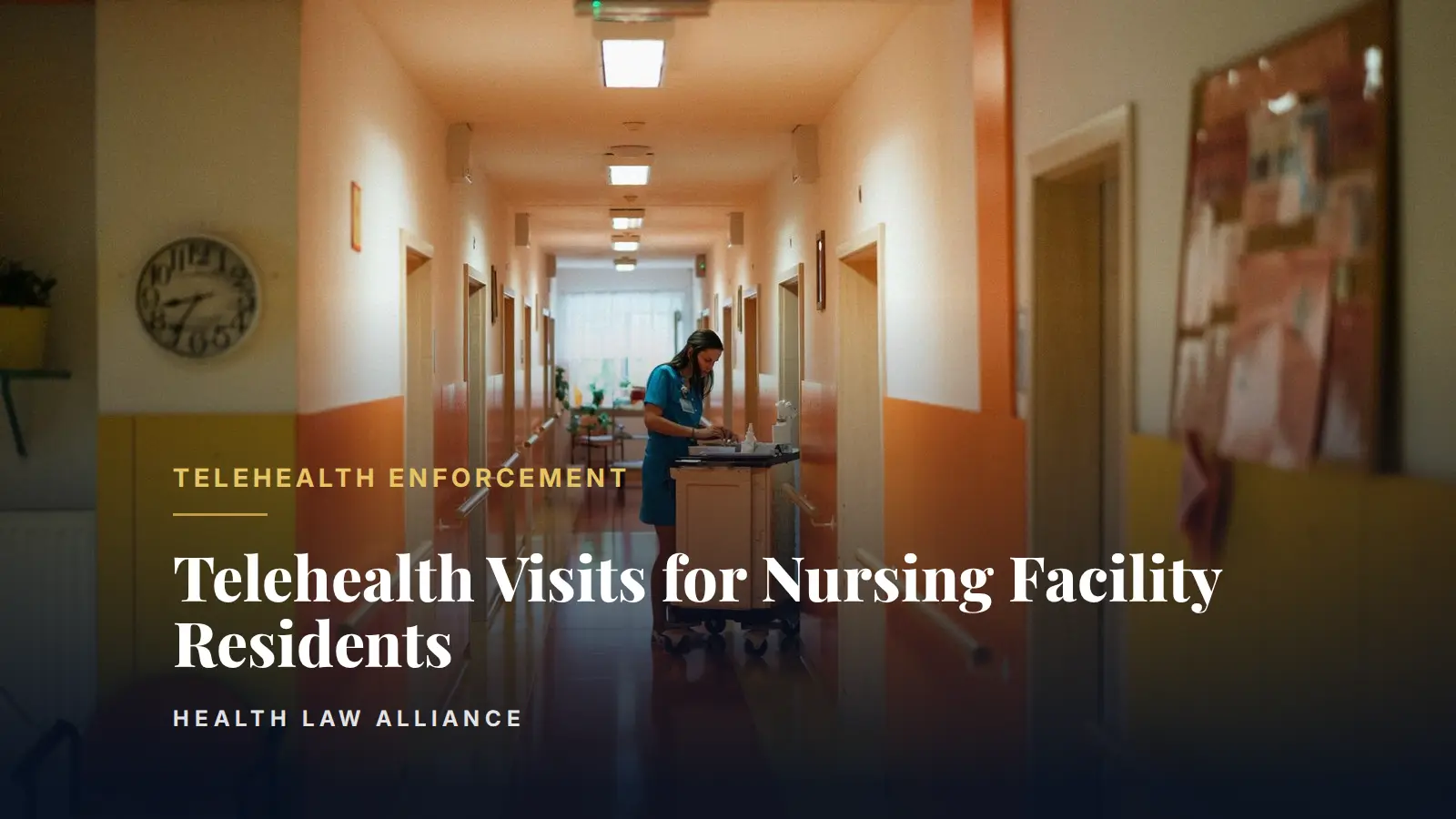
Medicare permanently removed the frequency limit on telehealth visits to nursing facility residents starting in 2026, letting providers see subsequent nursing facility care patients by video as often as the record supports rather than on a fixed clock. The change comes from the Centers for Medicare & Medicaid Services' CY 2026 Physician Fee Schedule Final Rule (CMS-1832-F), finalized October 31, 2025 and effective January 1, 2026. The chance to see more residents remotely raises the audit stakes with it: every telehealth visit still has to meet the conditions in 42 CFR Section 410.78, and the periodic physician visit the nursing home rules require still cannot be furnished by telehealth at all.
Which Nursing Facility Visits Medicare Covers by Telehealth
The four subsequent nursing facility care codes, CPT 99307, 99308, 99309 and 99310, remain on the Medicare telehealth services list for 2026. Coverage requires an interactive telecommunications system, real-time, two-way audio and video, under 42 CFR Section 410.78(a)(3). The audio-only exception in that subsection is limited to home-based telehealth when a patient cannot use video; it does not extend to a facility-based visit. The distant-site practitioner must be licensed to furnish the service under state law, under 42 CFR Section 410.78(b)(1), and the facility is an approved originating site under 42 CFR Section 410.78(b)(3).
The Frequency Limit CMS Removed for 2026
Subsequent nursing facility telehealth visits have carried a frequency cap for most of the last two decades: once every 30 days, then once every 14 days for dates of service on or after January 1, 2021. CMS suspended the cap under pandemic-era flexibilities and continued the suspension through CY 2024 and CY 2025. The CY 2026 Physician Fee Schedule Final Rule made the removal permanent: CMS states it is finalizing to permanently remove frequency limitations for subsequent inpatient visits, subsequent nursing facility visits, and critical care consultations, effective January 1, 2026.
The Periodic Physician Visit Medicare Still Requires In Person
Nursing facility residents must still be seen by a physician at least once every 30 days for the first 90 days after admission and at least once every 60 days after that, under 42 CFR Section 483.30(c)(1). CMS's State Operations Manual guidance on that section defines being seen to require actual face-to-face contact at the same physical location, not a telehealth arrangement. Substituting a telehealth visit for the mandated in-person visit itself is billing a service Medicare does not cover, regardless of the removed cap on every other subsequent visit in the same chart.
The 2026 rule removes the clock on subsequent nursing facility telehealth visits. The bar on using telehealth for the periodic visit the nursing home rules require in person stays in place.
Documentation That Keeps a Telehealth Claim Defensible
A defensible claim keeps three things separate in the chart: the date of the mandated in-person visit, the date and complexity level of each telehealth subsequent care visit, and the audio-video record supporting that the visit met the interactive telecommunications requirement rather than a phone call. A UPIC reviewing a nursing facility telehealth pattern will test whether the complexity billed under 99307 through 99310 matches the time and decision-making actually documented. A sample of unsupported visits can become an extrapolated recoupment demand across the lookback period even when most visits were medically appropriate.
Telehealth Nursing Facility Audits Rarely Stay Isolated
A documentation gap rarely surfaces alone. A pattern of unsupported complexity levels can draw a civil investigation under the False Claims Act if the government concludes the practice knew the record did not support the level billed. Payers that audit telehealth claims directly raise the records-production issues covered in Telehealth Records Requests From Payers, and a distant-site practitioner billing nursing facility visits in several states faces the questions covered in Practicing Across State Lines: Telehealth Licensure Enforcement.
Why Early Legal Counsel Is Critical
It is critical that telehealth providers and nursing facility medical directors promptly retain experienced healthcare defense counsel upon receiving a records request, an audit notice, or any other government or payer inquiry concerning nursing facility telehealth visits. Early legal intervention can protect the provider's rights, ensure appropriate responses to government and payer requests, avoid inadvertent admissions, preserve relevant defenses, and allow counsel to communicate with investigators or auditors on the provider's behalf. Delaying legal representation can significantly affect the outcome of a matter and expose the provider to unnecessary risk.
How Health Law Alliance Can Help
Health Law Alliance defends telehealth and telemedicine providers nationwide facing DEA, Ryan Haight Act, and payor audit scrutiny. Health Law Alliance has represented 2,500+ clients nationwide. If your practice bills telehealth visits for nursing facility residents and has received a records request, an audit notice, or an extrapolated recoupment demand, contact Health Law Alliance's telehealth law and telemedicine attorneys for a free, confidential consultation.