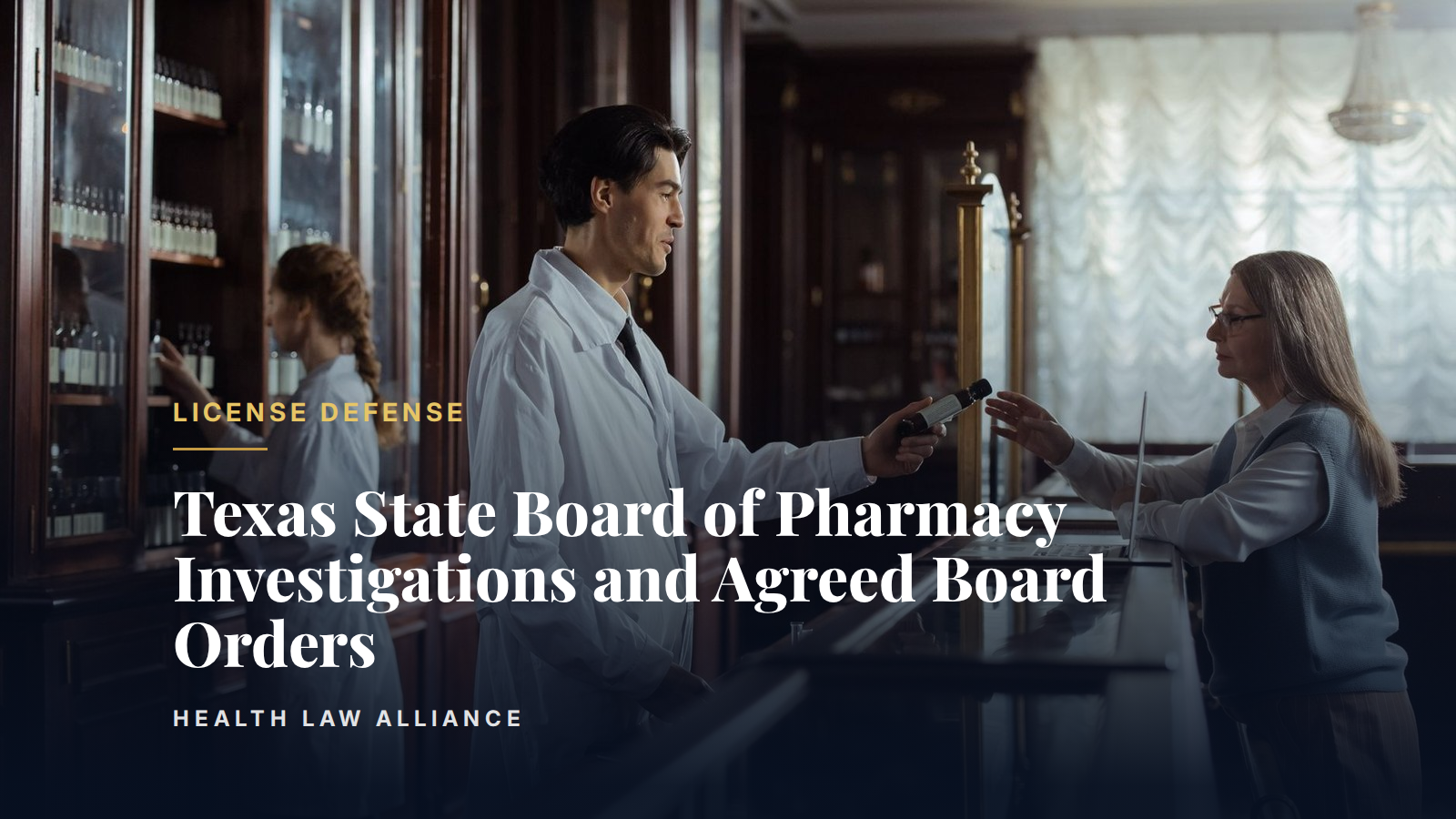
A notice from the Texas State Board of Pharmacy rarely arrives as a single letter. It starts as a complaint, an inspection finding, or a referral from another agency, and it can end in license restrictions that follow a pharmacist or pharmacy for years. Understanding how a complaint becomes a formal investigation, and how a contested TSBP case can resolve through an informal settlement conference and an Agreed Board Order, is the first step toward protecting a Texas pharmacy license.
How a Complaint Becomes a TSBP Investigation
TSBP accepts written complaints from patients, employers, other licensees, and regulators, but will not act on an anonymous submission. Board staff first determine two things: whether the person or pharmacy named is actually licensed by TSBP, and whether the facts alleged, if true, would violate the Texas Pharmacy Act or Texas Drug Laws. The Board has said directly that it does not have jurisdiction over complaints about rudeness, customer service, or billing disputes. A complaint that clears that threshold moves to a TSBP investigator, who may review dispensing records, inspect the pharmacy, and contact the person who filed the complaint for more detail.
A licensee weighing whether to voluntarily surrender a license while an investigation is open faces a different calculation than agreeing to a proposed order later in the process, and that decision should not be made without counsel.
The Informal Settlement Conference
When the Board decides to pursue disciplinary action, the licensee is notified of the date, time, and location of an informal settlement conference and told which issues will be discussed. A panel made up of Board staff and generally two Board Members hears from the licensee and can recommend dismissal of the case, a formal warning, or a disciplinary sanction. Complainants may attend at their own expense when the Texas Pharmacy Act and Board rules permit it, and some conferences are confidential by law.
An Agreed Board Order resolves a licensee's case without an admission or denial of guilt, but it still becomes a permanent, public disciplinary record.
Agreed Board Orders and the SOAH Hearing Alternative
If the panel recommends a sanction and the licensee agrees, a proposed Agreed Board Order, often called an ABO, is presented to the Board at its next regularly scheduled meeting. An approved ABO becomes a public TSBP disciplinary record even though it carries no admission of guilt. A licensee who rejects the panel's recommendation, or whose proposed order the Board itself declines to approve, moves into a contested case: a public hearing before an Administrative Law Judge at the State Office of Administrative Hearings, known as SOAH. The ALJ issues a Proposal for Decision that goes back to the Board Members, who make the final call, and that decision may be appealed under Texas law.
Why Early Legal Counsel Is Critical
It is critical that pharmacists and pharmacies promptly retain experienced healthcare defense counsel upon receiving notice of a TSBP complaint, investigation, or informal settlement conference. Early legal intervention can shape what the investigator sees, keep the licensee from making an unintended admission during an interview, and determine whether the matter resolves through an Agreed Board Order or proceeds to a contested SOAH hearing. A board sanction can also trigger consequences beyond the state line. Provider manuals such as CVS Caremark's name a Board of Pharmacy sanction as grounds for network termination, and a license revocation or suspension is also a basis for exclusion from federal health care programs. Delaying legal representation can significantly affect the outcome of a matter and expose the license to unnecessary risk.
How Health Law Alliance Can Help
Health Law Alliance represents pharmacists and pharmacies before the Texas State Board of Pharmacy at every stage, from the first complaint notice through the informal settlement conference, Agreed Board Order negotiation, and a contested SOAH hearing if the matter proceeds that far. The firm's Texas pharmacy board practice sits alongside its broader professional license defense work for providers nationwide.
Health Law Alliance has represented 2,500+ clients nationwide.
If your pharmacy or pharmacist license is now the subject of a TSBP complaint or investigation, contact us for a free, confidential consultation.