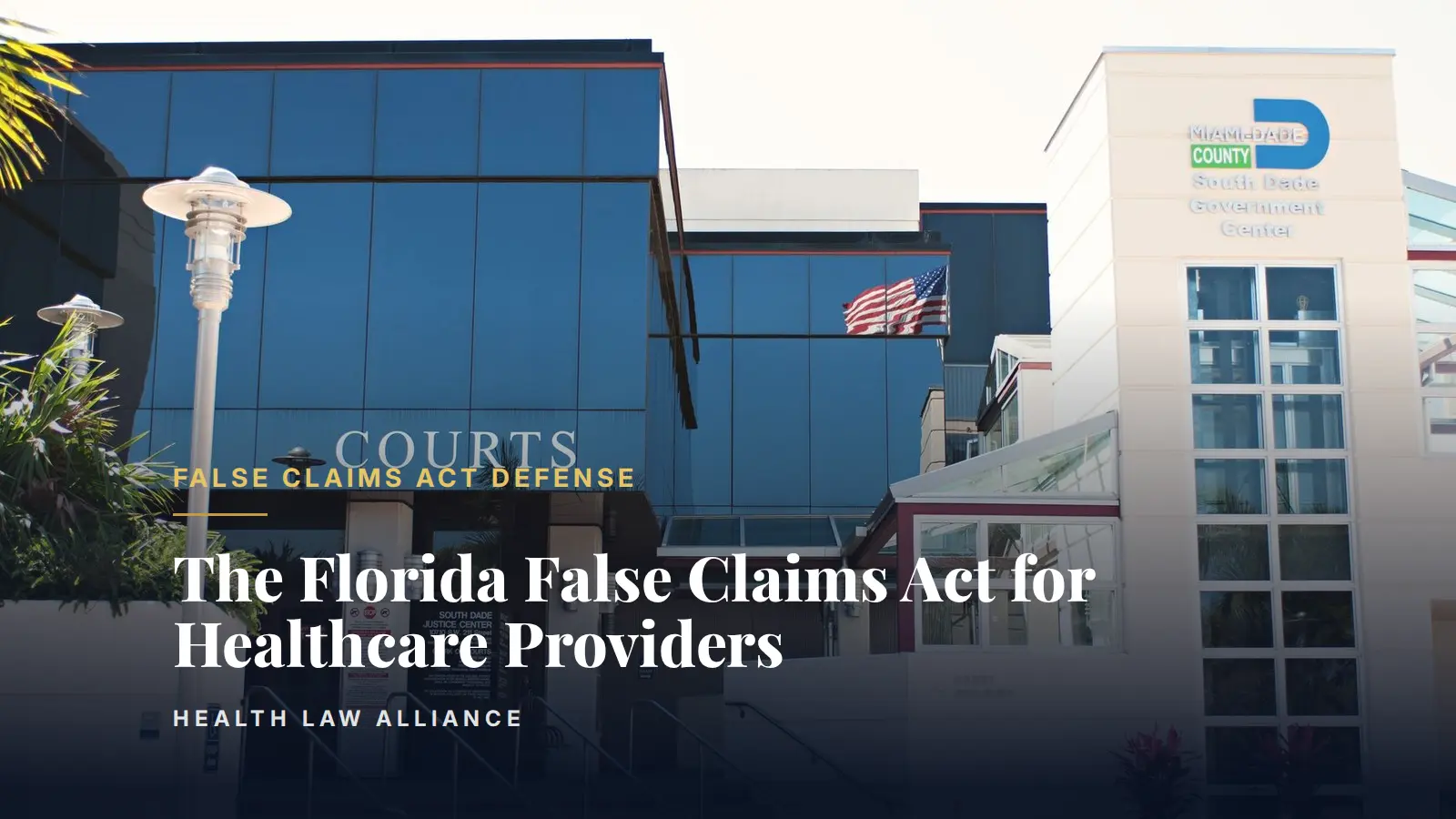
The Florida False Claims Act gives both the state and private relators a civil tool to pursue healthcare providers that bill Florida's Medicaid program on a false or fraudulent basis, running separate from, but often parallel to, the federal False Claims Act. Any person can file a sealed qui tam complaint in Leon County circuit court, and the Florida Attorney General's Office can take over the case, decline it, or let the relator proceed alone. For a compliance officer at a Medicaid-billing provider, the exposure runs to civil penalties, treble damages, and the downstream risk of program exclusion.
Scope of the Florida False Claims Act
Florida Statutes 68.081 through 68.092 make up the Florida False Claims Act, the state-law counterpart to the federal False Claims Act. Section 68.082 defines a claim broadly, covering any request for money or property made to a state agency, including the Agency for Health Care Administration's Medicaid program. A person is liable who knowingly presents a false or fraudulent claim for payment, knowingly makes or uses a false record material to a claim, or conspires to do either. The statute's definition of knowing tracks the federal standard, actual knowledge, deliberate ignorance, or reckless disregard of the truth, so ordinary billing negligence falls outside the Act's reach. A violation carries a civil penalty of not less than $5,500 and not more than $11,000 plus treble damages.
Qui Tam and Relator Provisions
Section 68.083 lets a private relator bring a civil action for a violation of section 68.082 on behalf of the state and the affected agency. The complaint must be filed under seal in Leon County circuit court and served on the Attorney General and the Chief Financial Officer, and it stays confidential while the Department of Legal Affairs investigates. The department has 60 days after it receives the complaint and the relator's supporting evidence to elect to intervene and take over prosecution, decline and let the relator proceed alone, or seek a court-approved extension of the seal. Under section 68.084, the department has primary responsibility for the action once it intervenes. When it declines, the relator keeps the right to conduct the litigation.
Florida's intervention decision mirrors the federal process. How a Qui Tam Lawsuit Unfolds: From Sealed Complaint to Intervention describes how a sealed complaint moves toward that decision, and Presenting a Defense to DOJ Before the Intervention Decision addresses the same decision point when a related federal qui tam action proceeds in parallel.
Parallel Enforcement by the State
A Florida False Claims Act matter rarely runs alone. The Attorney General's Office enforces the Act through its Medicaid Fraud Control Unit, which investigates and prosecutes Medicaid provider fraud directly. A single billing pattern can produce a Florida civil action, a parallel federal qui tam matter, and a Medicaid Fraud Control Unit referral at the same time. A civil resolution can also lead to a corporate integrity agreement or put a provider's participation in federal healthcare programs at risk of OIG exclusion, consequences that attach independently of any criminal charge. How parallel state false claims exposure compounds across jurisdictions surveys how other states' own false claims statutes interact with the federal Act the same way Florida's does.
Florida's 60-day intervention window decides who controls the case, the Department of Legal Affairs or the relator who filed it, and that choice shapes the entire defense.
Health Law Alliance's attorneys have overseen 2,000+ audits and handled 5,000+ matters, with 25+ years of experience.
Why Early Legal Counsel Is Critical
It is critical that healthcare providers promptly retain experienced healthcare defense counsel upon receiving a Florida False Claims Act notice, a qui tam complaint, or a related Medicaid Fraud Control Unit inquiry. Early legal intervention can protect the provider's rights, shape the response to the Department of Legal Affairs before the 60-day intervention decision, avoid inadvertent admissions, and allow counsel to communicate with investigators on the provider's behalf. Delaying legal representation can significantly affect the outcome of a matter and expose the provider to unnecessary civil and collateral risk.
How Health Law Alliance Can Help
Health Law Alliance represents healthcare providers through a False Claims Act matter, from a sealed qui tam complaint through the intervention decision. Inside an FCA Investigation: The Defense Timeline maps that process end to end. Providers facing a Florida False Claims Act notice or a related state or federal inquiry can contact Health Law Alliance through its false claims act defense practice for a free, confidential consultation.