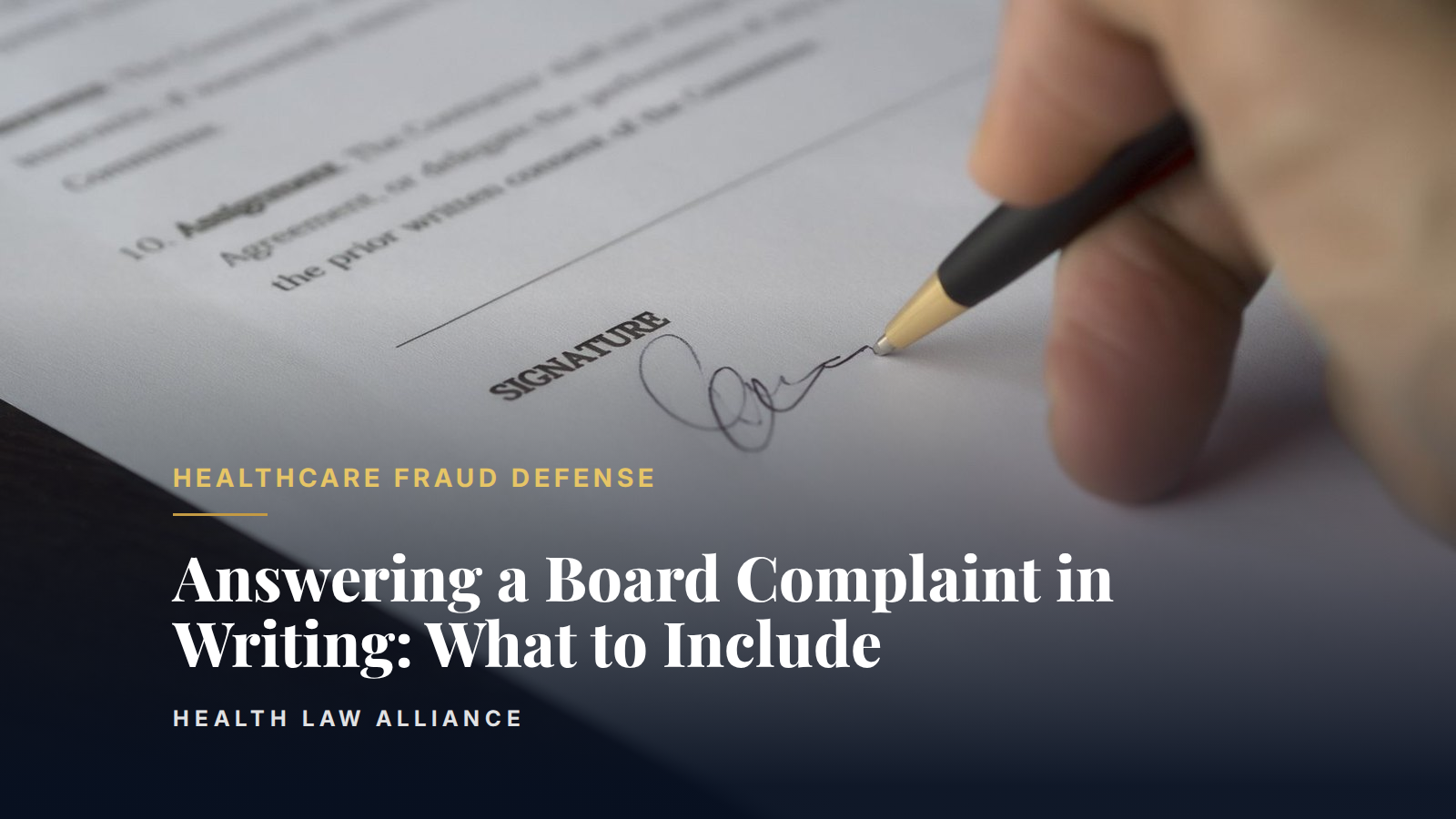
A board complaint's first written response does more than answer the board. It becomes the first exhibit in every proceeding that follows, including a federal OIG exclusion proceeding if the license is ever revoked or suspended for reasons bearing on competence, performance, or financial integrity, or surrendered while a disciplinary proceeding on the complaint is pending. Under 42 U.S.C. 1320a-7(b)(4), that kind of licensing action is itself grounds for an OIG exclusion from federal health care programs, independent of whatever underlying facts prompted the complaint. The response has to be written for that record, not only for the board reviewer reading it first.
Tone
A board investigator reads a provider's first response as a data point about the provider, not only about the complaint. Defensive or combative language reads as a provider who will not take correction. A response that is factual, organized, and respectful reads as a provider taking the process seriously, whatever the ultimate finding. A board with discretion to resolve a complaint informally, through a warning or an informal conference rather than a formal proceeding, is more likely to use that discretion for a provider whose response reads as credible.
Records
The written response should attach only the records actually responsive to the complaint's allegations, organized by date and labeled, not a complete chart dump that forces the investigator to find the relevant pages. A response that volunteers records the complaint never asked about expands the investigation's scope for no benefit. A response that withholds a record the board already has from another source reads as concealment. The narrowest accurate response is the safest one: answer what was asked, completely, and nothing more.
Admissions
A written response is not the place to concede a legal conclusion, a standard-of-care violation, impairment, or any characterization the provider has not had full time and counsel to evaluate. Stating facts accurately, what happened, when, and who was involved, is different from conceding what those facts mean. A provider can acknowledge a documented fact, a missed signature, a delayed entry, without admitting the legal significance a board or a later federal reviewer might attach to it. Once written, an admission is part of the record, including in the situation covered in Voluntary License Surrender While Under Investigation, where a surrender made to avoid a hearing can trigger the same exclusion exposure as a revocation.
What to Leave Out
The response should not speculate about the complainant's motives, criticize the board process itself, or volunteer information about unrelated patients or matters the complaint did not raise. Each addition expands what a reviewer reads without narrowing what they conclude, and each can read as an attempt to distract from the actual allegation. The same discipline applies whether the complaint concerns a DUI arrest, an allegation covered in Accused of Drug Diversion at Work: Nurses and Anesthesia Providers, or a billing dispute. A board action can also trigger a payer's network termination clause on its own, separate from the board's finding, and language written for the board reviewer should read no differently in front of a federal prosecutor if the same facts later prompt a subpoena or a target letter.
The only test for a sentence in a board complaint response is whether it answers the complaint. Nothing else earns its place in the letter.
Why Early Legal Counsel Is Critical
It is critical that providers promptly retain experienced healthcare defense counsel before submitting a written response to a board complaint. Early legal intervention can protect the provider's rights, help keep the response accurate without conceding more than the facts support, avoid inadvertent admissions, preserve relevant defenses, and allow counsel to communicate with the board on the provider's behalf. Delaying legal representation can significantly affect the outcome of a matter and expose the provider to unnecessary risk.
How Health Law Alliance Can Help
Health Law Alliance defends physicians, nurses, pharmacists, and other licensed professionals through board complaints, from the first written response through a formal disciplinary hearing.
Health Law Alliance's attorneys have overseen 2,000+ audits and handled 5,000+ matters, with 25+ years of experience.
If you have received a board complaint, contact us today for a free consultation through our Professional License Defense practice.