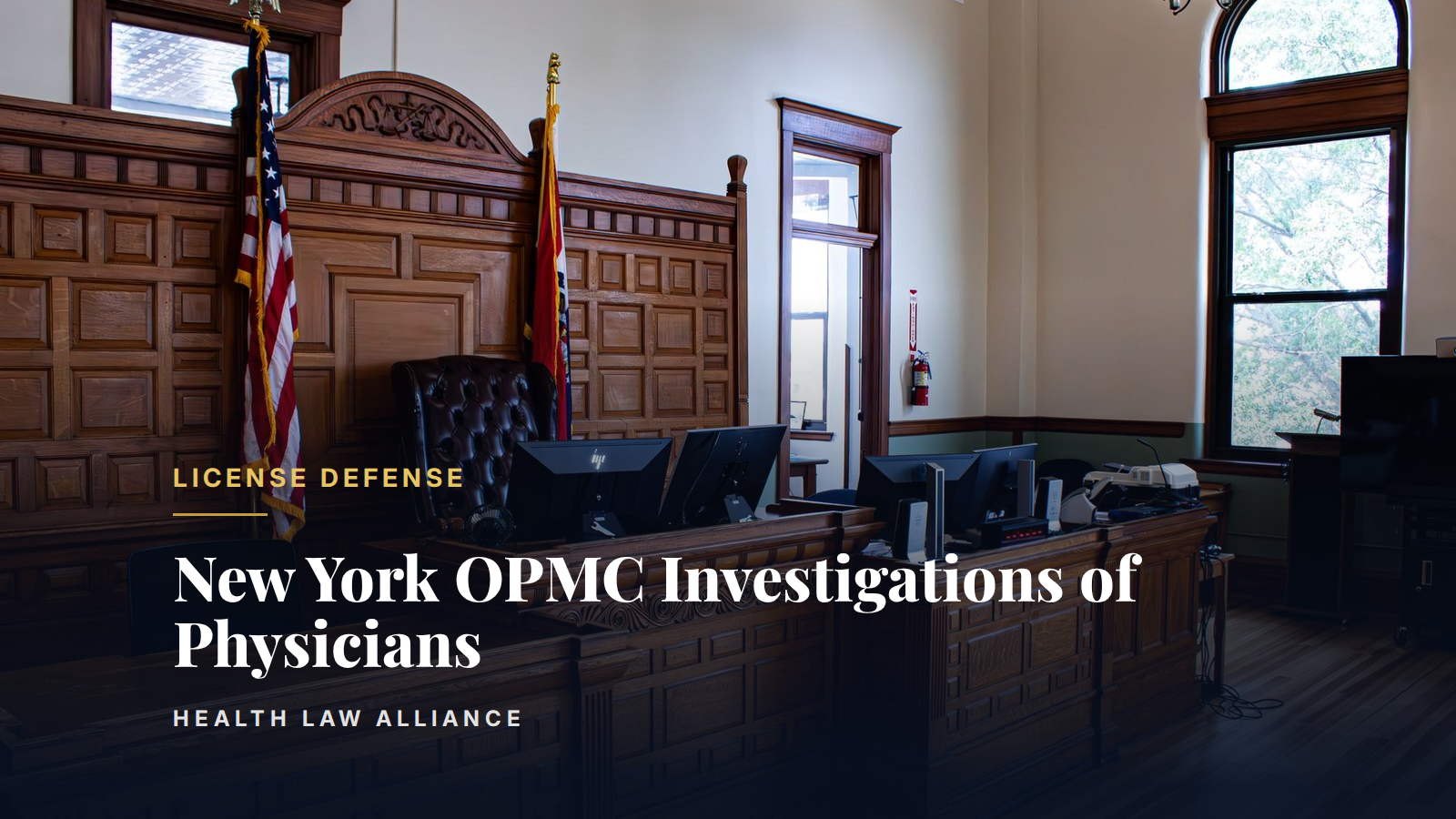
A complaint to the Office of Professional Medical Conduct (OPMC) rarely announces itself as a hearing. It arrives as a notice scheduling an interview, and by then Department of Health investigative and medical staff have already reviewed the complaint and decided it needs a response. OPMC must investigate every complaint it receives, regardless of who filed it, and a New York physician's matter can end in a license suspension, revocation, or a fine the Board for Professional Medical Conduct can set as high as $10,000 per finding of guilt. How the physician handles the interview, not the eventual hearing, shapes what the investigation committee sees first.
How an OPMC Matter Opens
New York law requires OPMC, acting as staff to the Board for Professional Medical Conduct, to investigate every complaint it receives and also lets the office open a matter on its own. Patients, family members and friends file more than half of all complaints against physicians, and Public Health Law 230 separately requires hospitals, health maintenance organizations, and other licensed health professionals to report misconduct they observe or suspect, with misconduct defined in the Education Law. A screening step filters out complaints outside OPMC's jurisdiction, such as a fee dispute without fraud or a complaint about bedside manner, before an investigator is assigned. The generic version of this intake pattern, common across state medical boards, is covered in Physician License Investigations: Standard of Care and Documentation Cases.
The Investigation and the Physician's Interview
OPMC investigators and medical coordinators review the physician's records and interview the complainant, the physician, and anyone else with relevant knowledge. A physician under investigation is expected to cooperate and may have counsel present throughout, including at the interview that comes before any investigation committee convenes. Under Public Health Law 230, giving the physician that interview opportunity is a condition precedent to convening a committee, and the statute gives OPMC ninety days from the interview to convene one if the matter proceeds. A pharmacy board follows its own notice-and-response process, covered in Responding to a Board of Pharmacy Complaint.
What the Investigation Committee Can Do
The investigation committee is drawn from the Board for Professional Medical Conduct and sits with two physicians and one lay member on each case. It can recommend to the OPMC Director a hearing, additional investigation, dismissal of the matter, or a non-disciplinary warning instead. A committee that finds the physician poses an imminent danger to the public can recommend summary suspension of the license. Only a misconduct finding, or a summary suspension order, moves the case to charges and a hearing.
Giving the physician a chance to be interviewed is a condition precedent under Public Health Law 230. The state cannot convene an investigation committee without it.
The Hearing Track, Not a Consent Order
Texas's medical board resolves about 90 percent of its disciplinary actions through a negotiated agreed order rather than a contested hearing. New York's Public Health Law 230 sends a misconduct finding straight to charges and a hearing, with no pre-hearing settlement track written into the statute. The hearing goes before a second committee of the Board for Professional Medical Conduct, again two physicians and a lay member, where counsel for each side presents evidence and the committee decides guilt and any penalty. Either side can appeal that decision to an Administrative Review Board of three physicians and two lay members.
A hearing committee's finding does not stay contained to the medical license. It is reported to the National Practitioner Data Bank and can trigger an OIG exclusion from federal healthcare programs, network termination from the insurance panels that pay the physician's claims, or, if the same conduct draws a federal inquiry, a subpoena or a target letter. The records a board can demand during its own investigation are covered in Responding to a Board Subpoena for Patient Records.
Health Law Alliance's attorneys have overseen 2,000+ audits and handled 5,000+ matters, with 25+ years of experience.
Why Early Legal Counsel Is Critical
It is critical that physicians promptly retain experienced healthcare defense counsel upon receiving an OPMC interview notice, a document request, or a notice of charges. Early legal intervention can protect the physician's rights, help shape an accurate and complete response to the office's questions, avoid admissions that narrow the physician's defenses at a later hearing, and let counsel communicate with investigators on the physician's behalf. Delaying legal representation until after the interview or a response deadline passes can significantly narrow these options.
How Health Law Alliance Can Help
Health Law Alliance represents physicians nationwide in professional license defense matters, including OPMC interviews, investigation committee referrals, and state board hearings. If you have received an OPMC interview notice or a notice of charges, contact Health Law Alliance for a free, confidential consultation.